

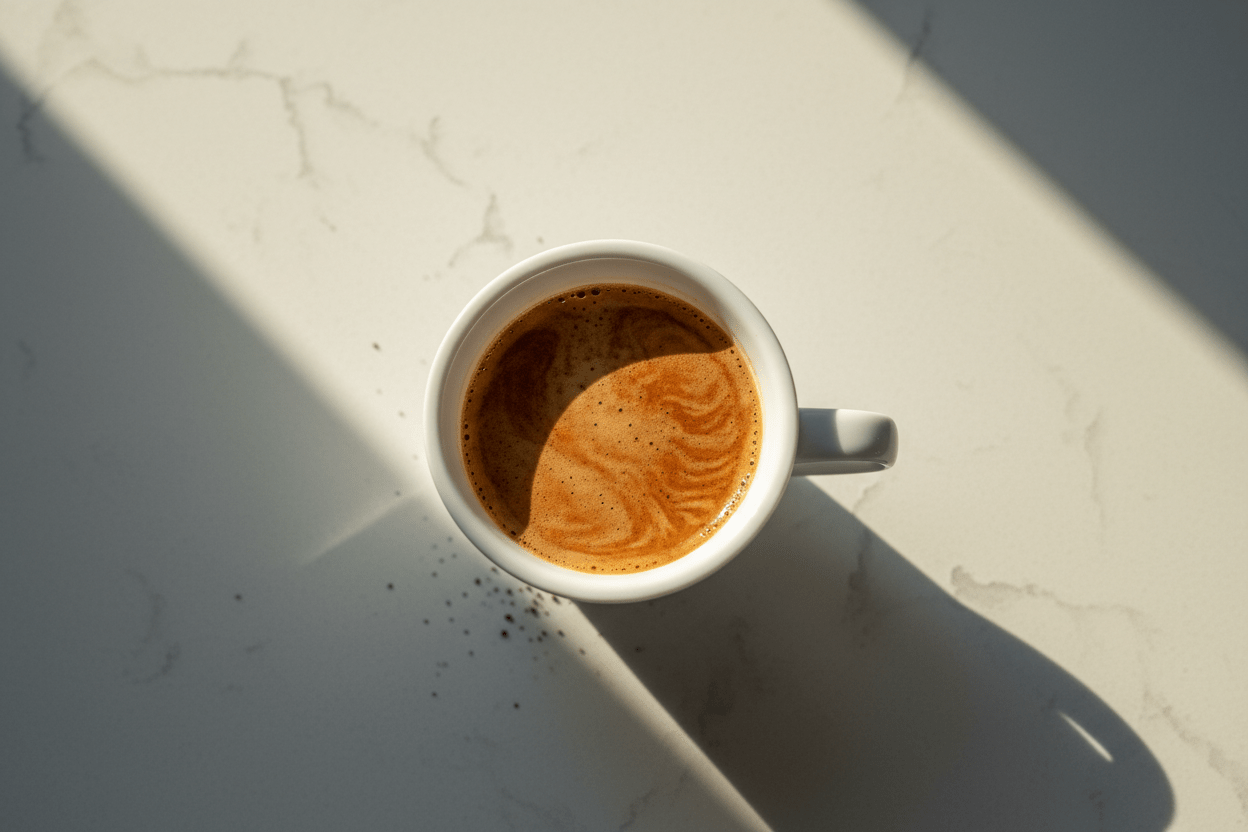
5 Tips for the Perfect Espresso at Home
How to make a good espresso at home? This is a question that troubles many coffee lovers who try their hand at being a home barista. Preparing espresso at home can be challenging, but also extremely rewarding – with the right techniques and equipment, you can achieve results comparable to your favorite coffee shop. For all you coffee enthusiasts, we bring you home barista tips and 5 practical steps that will help you get a perfect espresso at home every time. These tips are the result of both theory and practice – we combine key techniques and recommendations, with a friendly tone, so that you can apply what you've learned immediately after reading. Let's get started!
1. Use fresh and high-quality coffee
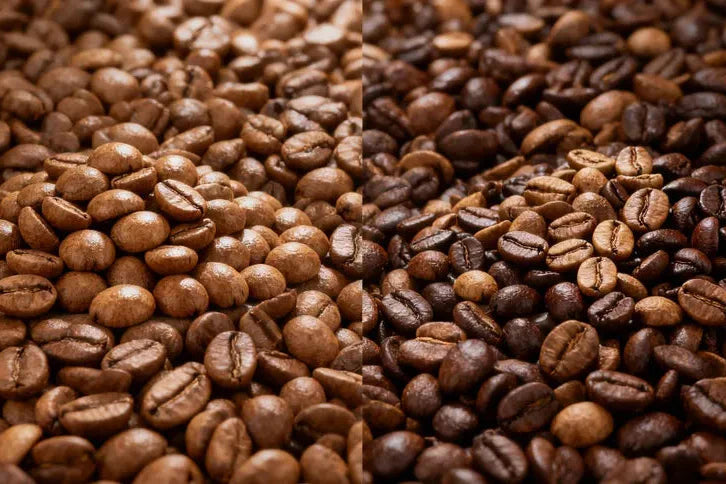
The best espresso starts with the best beans. Coffee freshness is crucial: look for coffee roasted less than a month ago and buy quantities you can consume in about 2–3 weeks. After that period, coffee begins to lose its aromatic components, and espresso will not have the rich creamy layer and taste it should. Whether you're experimenting with exotic single-origin coffee or sticking to a proven espresso blend, make sure the beans are fresh, properly stored (in an airtight container, at room temperature, away from sunlight), and appropriately roasted for espresso.
Also, choose quality coffee – specialty grade if possible. The price of these beans may be higher, but the quality of the beans (size, uniformity, processing method) directly affects how good the extraction will be. Espresso is a highly concentrated drink, which means that the flaws of bad coffee will be magnified in the cup. In contrast, premium beans will give you a wide range of aromas: from chocolate and hazelnut in blends to fruity, floral notes in single-origin varieties. Adjust the choice to your taste – an espresso blend usually offers a classic flavor profile (often notes of dark chocolate, caramel, perhaps a slight fruitiness) and reliability, while single-origin beans can surprise with complexity (e.g., notes of blueberry, lavender, citrus fruits), which is great for those who like to discover new flavors.
In short, start with good coffee. Bad or stale beans, not even the most expensive machine or the best technique, will turn into an excellent espresso. You will invest ~30 seconds in extraction – let those 30 seconds be worth it by using top-quality coffee.
2. Invest in a quality grinder and proper grinding
Many people think that good coffee and a machine are enough for a good espresso, but the truth is that the coffee grinder is equally important. Espresso requires very fine and uniform grinding – only a precise burr grinder (a grinder with conical or flat burrs) can provide this. If you use a cheap blade grinder or an imprecise grinder, there's a high probability that you'll get uneven coffee particles: some too coarse (poorly extract, give acidity), and some too fine (over-extract, give bitterness). The result is an unbalanced espresso, often thin-bodied and without true aroma.
Grinding tips:
-
Always grind coffee immediately before preparing espresso. Ground coffee loses its aroma very quickly – aromatic oils oxidize after just a few minutes in the air.
-
Adjust the grind fineness in small steps until you achieve the desired result. Ideally, a double espresso (about 18g of coffee) should extract in ~25–30 seconds and yield about 36–40ml of beverage (approximately a 1:2 coffee mass to liquid ratio). If the espresso flows too quickly (under 20s for a double), you need to grind finer; if it flows too slowly or "drips" (significantly over 30s for the same amount), slightly coarsen the grind – it's too fine and needs to be made a bit coarser.
-
Use a reliable grinder with stable settings. Some popular choices among home baristas are specialized espresso grinders, but even more affordable manual grinders with good burrs can yield excellent results for a single cup you enjoy slowly.
Remember, no espresso machine can compensate for poorly ground coffee. Evenly ground coffee is a prerequisite for even extraction. Therefore, if you are just building your home setup, budget for a good grinder – it may be a less "exciting" piece of equipment than a shiny machine, but it is the true hero behind the scenes of every perfect cup.
3. Pay attention to water temperature and extraction stability
Professional baristas will tell you: espresso is a science of details. Among those details, water temperature and extraction stability hold an important place. Here's why and how to apply it at home:
-
Heat up the machine properly: Most home espresso machines need to heat up for at least 15 minutes (from turning on) before attempting to make a serious espresso. The heat should saturate the entire machine – boiler, group head, portafilter, cups. A warm machine = more stable temperature during extraction. Running a little water through the empty group head before the first espresso (a "flush") helps equalize the temperature in both the group head and portafilter.
-
Optimal extraction temperature: As we mentioned earlier, the ideal temperature for espresso is approximately 90°C to 95°C. Within this range, you can "fine-tune" the taste: the lower range (~90–91°C) highlights more acidic, fruity, and floral notes, while the higher range (~94–95°C) emphasizes body, sweetness, and bitter chocolate tones. Experiment with your coffee – for example, if you get an espresso that is too acidic, try a slightly higher temperature (if your machine has that option) or wait a few seconds longer after the thermostat light turns off, so the water is a little warmer. Conversely, if the taste is too bitter or strong, slightly lower the temperature or start the extraction just before the water reaches its maximum. Important: A few degrees make a big difference – too low a temperature can leave the espresso under-extracted and sour, while too high leads to a bitter, overcooked cup. Look for that sweet spot where the taste is most balanced.
-
Pressure and flow stability: The standard for espresso is a pressure of ~9 bar during extraction. Most home machines have a pump factory-set to 9–15 bar, but what's actually more important is how you prepare the puck (the coffee tablet in the portafilter). Evenly distributed and properly tamped coffee provides uniform resistance to water, resulting in consistent pressure during flow. If the coffee accumulates more on one side or is poorly tamped, the water will find an easier path (called channeling) and you will get a too weak or too bitter espresso. So, pay attention to tamping: press the tamper straight down, with moderate and even force (about 15–20 kg of pressure, although the number is less important than consistency – it's crucial to tamp the coffee evenly every time, rather than how hard you press after all the coffee is compressed).
-
Utilize pre-infusion if available: Some machines (usually those with an E61 group head or more advanced electronics) offer pre-infusion – a few seconds of gentle flow before full pump pressure. If your machine supports this, definitely use this feature. Pre-infusion helps the coffee swell and evenly saturate before the "true" extraction, reducing the chance of channeling and contributing to a better taste balance.
-
Be consistent in extraction time: As a guideline, aim for extraction to last about 25 seconds (plus/minus 5 seconds) from the moment you press the button/manual switch until you stop. Consistent timing (along with stable temperature) ensures that each cup has a similar degree of extraction, which is a prerequisite for repeatable results. If you notice that the time varies greatly between shots even though you're doing everything the same, it's possible that your machine doesn't have good thermals stability or the dosing/grinder isn't consistent – go back a step and check those elements.
-
Dosing: Find the amount of coffee that works best for your equipment and taste preferences. The standard for a double espresso is about 18 grams of coffee for a double basket (16–20g is a common range, depending on the basket and coffee). Invest in a small digital scale (accurate to 0.1g) so you can precisely measure the dose every time – consistency in dosing leads to consistent extraction.
-
Distribution: After grinding coffee into the portafilter, distribute the coffee evenly before tamping. You can gently shake the portafilter, level it with your finger ("Stockfleth" method), or use special distribution tools – the important thing is that there are no clumps and that the density is even throughout before pressing. This preparation prevents channeling.
-
Tamping: Tamp the coffee with the tamper straight down, using even pressure. It's not necessary to "stamp" with all your might – it's enough to press firmly until the coffee is compressed and offers resistance, and beyond that, there's not much effect on extraction. The key is to hold the tamper horizontally so that the coffee "puck" is level – any tilt means the water will penetrate the thinner part more easily. Once tamped, don't get into the habit of twisting the tamper while lifting it – although some do it to "polish" the surface, it could lead to micro-cracks on the edges of the puck. Just press, release, and wipe any crumbs from the edges of the portafilter.
-
Proportions and time: As we mentioned with grinding, aim for an approximate brew ratio of 1:2 (ratio of dry coffee mass to liquid espresso). So, for 18g of coffee, about 36g of espresso beverage is a good starting recipe. This usually yields 30ml per cup for a double extraction (or about 60ml total if you're making a double espresso to be split into two cups). A time of ~25 seconds is the starting point for this – if you're out of balance (too short/too long), adjust the grind as described. Mentally (or even physically) record the parameters when you get a perfect shot so you know what works next time. And don't forget: one coffee – one recipe. If you change beans, you'll probably need to "tweak" the grinder and parameters again, as every coffee is different.
-
Analyze the result: After each espresso extraction, look at the puck (it should be firm, relatively dry, and level, indicating good extraction), the crema (a beautiful tiger-striped crema suggests proper extraction), and of course – the taste. If it's not what you want, change only one thing at a time (e.g., just the grind, or just the dose) to more easily identify what improves things. Learning from each cup is the path to mastery.
-
After each use: Discard the used coffee puck immediately (do not leave it in the portafilter for long, as moisture creates residue). Flush a little water through the group head (without the portafilter) to rinse off coffee residue from the shower screen. Wipe the gasket around the group head where the portafilter seals. Also, clean the steam wand after frothing milk – release steam briefly and wipe the wand so no milk residue remains.
-
Daily: Always run one "empty" water extraction through the portafilter in the morning (when the machine is heated up) to heat everything and clear any overnight dust. At the end of the day (or after the last espresso), perform a quick backflush with clean water: place a blind filter (a solid basket without holes, usually included with the machine) in the portafilter, run the pump for ~5–10 seconds, then stop, a few times. You'll see dirty water coming out of the drain – this removes fine coffee particles and oils from the valve and group head. (Note: if your machine has valves adapted for backflushing – most home machines with a three-way valve support it, e.g., Rancilio Silvia, Rocket, Gaggia Classic, etc. Machines with an open system/hose should not be backflushed.)
-
Weekly: Use a specialized cleaning agent (e.g., powdered espresso machine detergent) during backflushing once a week. The procedure is similar to using water, just add a little powder to the blind basket. This dissolves coffee oils that water cannot remove. After that, be sure to rinse thoroughly with clean water (several backflush cycles without powder) so that no cleaning agent taste remains. Weekly, you can also remove the shower screen from the group head (if the screw is designed to be easily unscrewed) and clean the fine mesh underneath, as residue also accumulates there. Also, clean and soak portafilters and baskets in hot water with a little dish soap – this will remove greasy coffee stains and keep them shiny.
-
Every 3-6 months: Check the manufacturer's instructions for descaling. If you use soft, filtered water, once every six months or less often might be enough, but if the water is hard, consider more frequent descaling or using filtered/bottled water from the start. Limescale can clog tubes and reduce the efficiency of the heater, resulting in unstable temperatures. Typically, descaling is done by running a solution of vinegar or a special descaling agent through the system, but ALWAYS follow the manufacturer's instructions (some machines have parts that acids can damage if not used correctly).
-
Regular servicing: After one or two years (depending on the intensity of use), consider replacing the group head gaskets – they are inexpensive and ensure a good seal between the portafilter and the machine (over time, the rubber can harden, causing water to leak around the edges of the portafilter). Also, check the condition of the filter in the water tank (if present) and the condition of the grinder (grinder burrs usually need to be replaced after a certain number of kilograms of coffee ground – check the grinder manufacturer's specifications).
Finally, equipment limitations: if you're using a basic machine without a PID, you've probably already encountered the concept of temperature surfing. This is a technique where you "catch" the right moment after the thermostat turns off the heater or similar, so that the temperature is within the desired range. Research your model – sometimes manufacturers or user communities provide instructions on how to best achieve consistency. But keep in mind, higher quality machines eliminate these worries with their automated control – you can then focus on other aspects of coffee making. If your budget allows, upgrading to a machine with PID control and a better group head will significantly facilitate achieving the perfect espresso at home (more on this in the conclusion of the text).
4. Perfect your extraction technique
Technique is what separates a good barista from an average one – even with premium beans and an expensive machine, poor technique can lead to weak espresso. Pay attention to the following elements and practice them consistently:
Remember, practice makes perfect espresso. 🙂 Don't be discouraged if you don't get consistent results at first. Practice regularly, try different coffees and recipes, and listen to your cup – you'll soon start to "feel" what needs to be changed. That's the fun of the home barista hobby: combining science and art in pursuit of the perfect espresso tailored just for you.
5. Keep your machine and equipment clean and in good working order
Finally, a tip many underestimate: cleanliness and maintenance of equipment. Coffee contains oils that stick to machine parts, and water (especially hard water) leaves scale over time. Neglecting hygiene can lead to the accumulation of deposits that spoil the taste (old, rancid coffee residues in the group head can give an unpleasant flavor to fresh espresso) or to machine malfunction. Here's how to keep your espresso machine in top shape:
Essentially, a clean machine = delicious coffee. You might spend a few extra minutes cleaning, but the reward will be consistent espresso quality and the longevity of your equipment. Don't forget about the cleanliness of the grinder: periodically remove coffee grounds, clean the burrs (there are special cleaning granules for grinders, or use a vacuum cleaner and a brush when it's unplugged and empty). All these routines ensure that every cup is like the first.

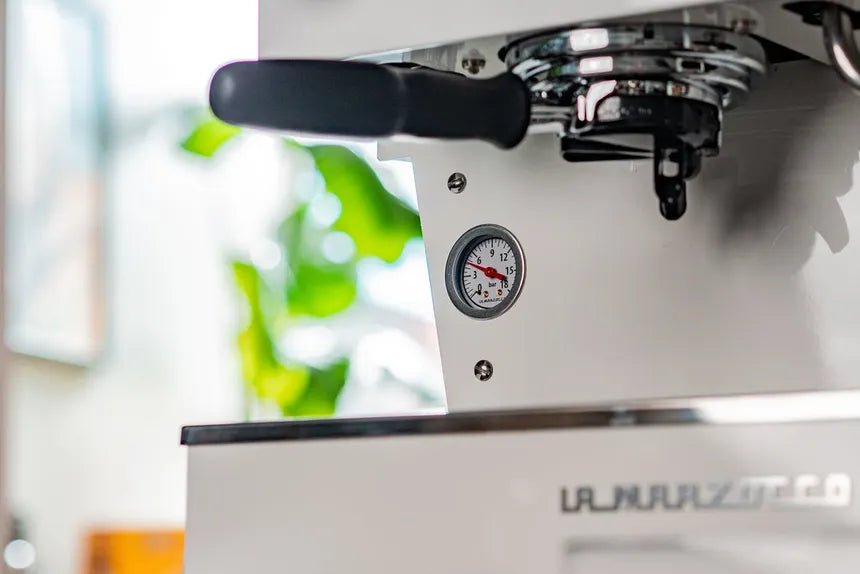
The Rancilio Silvia is a classic among home espresso machines – with proper maintenance and good technique, such a robust machine will allow you to prepare top-quality espresso at home, just like from a specialty coffee shop.
Conclusion and Call to Action: By applying these tips, we are confident that you will notice a significant improvement in the quality of your home espresso. Each of these steps – from selecting fresh coffee for a home machine, through proper grinding and technique, to equipment maintenance – adds a little something to the perfection in your cup. However, remember that espresso is a harmony of supreme coffee, skilled hands, and adequate machinery. If you've committed to quality beans and refined your technique, but still feel that your basic machine is limiting you, it might be time to consider investing in a better espresso machine. We've already mentioned some models like the Rocket Appartamento or Rancilio Silvia, which are a logical next step for enthusiasts – such machines offer more precise temperature control, stronger and more stable pressure, and thus more consistent, richer espresso every time.
There's no better feeling for a home barista than realizing that with the right tools and a little practice, they can make espresso equal to that from a top-notch coffee shop. That's why we encourage you: apply these tips, but also take action – assess whether your current equipment is up to the task or if it's time for an upgrade. Choosing the right machine (and grinder) may seem like a larger investment, but it pays off manifold through the satisfaction of every subsequent sip. Whether you decide to buy a new machine immediately or to get the most out of your existing equipment by following these steps – it's important to enjoy the process and the result. Make a good cup of coffee, toast yourself for the effort, and continue to explore the world of home espresso. Happy brewing and cheers!





Leave a comment
This site is protected by hCaptcha and the hCaptcha Privacy Policy and Terms of Service apply.