

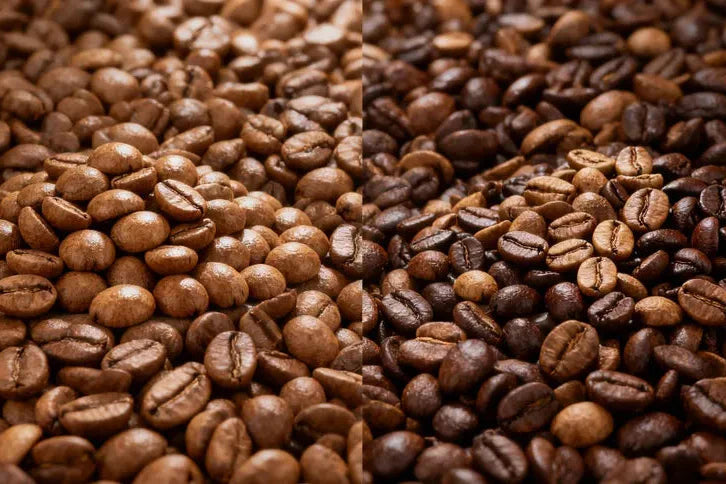
Single Origin vs. Blend – which coffee to choose for home espresso?
If you're a passionate coffee lover who prepares espresso at home, you've probably wondered what the best coffee for a home machine is: whether to choose single origin coffee (coffee from a specific region/farm) or espresso blend (a mixture of several types of beans). Both options have their advantages – single origin highlights the unique aromas of its origin, while a blend is usually balanced and consistent. Below, we will compare these two categories and explain how coffee choice, as well as the quality of your home espresso machine, can affect the final result in your cup. Our goal is to help you make the right decision in an educational and friendly tone, and along the way, we will highlight why a good home espresso machine (with PID control, E61 group, dual boiler...) can significantly enhance your coffee experience.
Single Origin Coffee vs. Espresso Blend: Differences in Taste and Experience
Single origin coffee comes from a single farm or region and often offers distinct, recognizable flavors characteristic of its origin. This means you can taste, for example, the floral or fruity notes of African coffee, or the chocolate and nutty tones of South American coffee, depending on where it comes from. Each harvest of single origin coffee can vary slightly, so the experience is somewhat adventurous and complex – it's never exactly the same from season to season. These coffees are exciting to explore because they allow home barista enthusiasts to discover the full spectrum of aromas that coffee can offer.
Espresso blend, on the other hand, represents a carefully crafted mixture of several types of coffee. Roasters combine beans from various sources to achieve a balanced taste and consistency. A good blend usually offers a harmonious cup – for instance, it might be designed to have chocolate and caramel notes dominating the profile, with a subtle fruity acidity in the background. The advantage of blends is that they are consistent throughout the year; when one component runs out, the roaster can replace it with a similar one to maintain the same flavor profile. Also, an espresso blend is often a "safe option" – it will forgive some preparation mistakes and often pairs better with milk in drinks like cappuccinos or lattes (as these blends are created to retain their full flavor even when combined with milk). Single origin coffees can also be excellent in milk drinks, but many have more delicate notes that milk can overpower. So, the choice also depends on whether you primarily drink espresso as a pure coffee or in milk-based beverages.
Preparing Espresso at Home and the Impact of Coffee Choice
It's important to understand how these differences manifest in home espresso. Single origin beans can be more sensitive to extraction parameters: they require precise adjustments for grinding, dosing, and even water temperature. Often, single origin coffees from specialty roasters are medium or light roasted to highlight their unique aromas – but such roasts may also require a higher temperature during extraction to achieve a full-bodied and balanced espresso. Espresso blends are usually roasted a bit darker and formulated to provide a stable result, making them a little easier for espresso beginners and home machines that lack fine parameter control.
Different coffees perform best at different temperatures: for example, a very bright and fruity single origin coffee might taste best at around 94°C, while a classic espresso blend with rich chocolate/nutty notes might fare better at 90–92°C. Water temperature directly affects extraction – too low a temperature leads to underextraction (espresso can be thin, overly sour, and "flat"), while too high a temperature results in an overly bitter, overextracted coffee. This is why, if you like to switch coffee types or try single origin espresso, it's crucial to be able to precisely control the temperature and extraction time for each.
This is where the role of the espresso machine comes in. Entry-level home machines often lack stable temperature during extraction – you might have noticed that sometimes your espresso turns out more sour or bitter even with the same beans, precisely due to these fluctuations. In contrast, more advanced home espresso machines allow for setting and maintaining an accurate temperature, helping you get the best out of every coffee. If you experiment: for instance, a single origin coffee from Ethiopia might only reveal its beautiful floral notes if the extraction temperature is not too high (otherwise, those delicate acids could become too dominant), while an espresso blend with a higher robusta content might turn out better at a slightly lower temperature to avoid excessive bitterness.
Conclusion: both single origin and blends can shine in the cup, but on the condition that they are prepared correctly – and the right machine and proper settings make a big difference.
Why a Good Home Espresso Machine Matters
As we've emphasized, the quality of the espresso machine can dramatically affect the final result. Professional coffee shops use expensive machines with precise regulation, because every small detail (temperature, pressure, stability) impacts the taste. The good news is that you can have some of these benefits at home too. Here are the key features that make a difference:
-
PID temperature control: PID (Proportional-Integral-Derivative controller) is an advanced thermostat that keeps water temperature very stable (usually within ±0.5°C of the set value). This virtually eliminates variations that can ruin a shot. Machines without PID operate on a thermostat that "engages" and "disengages" the heater with greater hysteresis, creating a temperature surfing effect – the temperature fluctuates up and down. With PID, you choose, for example, 93°C, and the machine precisely maintains that temperature. Stable water temperature is essential for consistent espresso, as variations of just a few degrees can lead to undesirable taste changes. Imagine PID as an autopilot that constantly adjusts heating so you can focus on other things.
-
E61 group: Many enthusiasts praise the famous E61 group – it's a steam/group head design that has existed since 1961 and is still at the top. It is characterized by a thermosiphon water circulation system that constantly heats the group, achieving exceptional thermal stability during extraction. The E61 group is massive (usually made of brass), so it retains heat very well, and it also has built-in pre-infusion: when you start extraction, water soaks the coffee at low pressure for a few seconds before full pressure kicks in, which helps the coffee extract evenly without channeling. All of this results in more consistent, sweeter, and more balanced espresso shots, cup after cup. It's no coincidence that the E61 group is found on so many premium home machines – it's a proven technology that still works excellently.
-
Dual boiler or heat exchanger: For home baristas who also enjoy milk-based drinks (like cappuccinos), the machine's ability to simultaneously or successively pull espresso and steam milk is important. Basic machines have one small boiler that must alternate between holding espresso temperature (~90–95°C) and heating up to a much higher temperature for steam (~120°C for steam production) – this wastes time and causes temperature fluctuations. Dual boiler machines have separate systems: one boiler maintains water for extraction at an ideal ~93°C, while the other produces steam for milk at a higher temperature. This way, you always have optimal conditions for both tasks. Machines with a heat exchanger have one larger boiler that constantly heats water for steam, while a tube (exchanger) passes through it, instantly heating water for espresso to the correct temperature – the effect is similar to a dual boiler: you can make multiple drinks consecutively, and the temperature remains stable.
In short, a better espresso machine provides you with precision and stability that you might not have known you were missing until you try it. If you're currently using a simpler machine, consider how much it would mean to you to have every subsequent espresso be just as good as the one before it – that's the difference advanced technology in a machine brings.
Machine Recommendations for Home Espresso Enthusiasts
If you've mastered the technique on a simpler machine and want to elevate your coffee quality to the next level, a logical step is to invest in a higher-quality espresso machine. Two renowned models often recommended to home baristas seeking pro performance are the Rancilio Silvia and the Rocket Appartamento.

The Rocket Appartamento espresso machine – compact yet powerful. It is equipped with the legendary E61 group and a copper heat exchanger, providing professional temperature stability and consistent extraction in home conditions.
Rancilio Silvia has been the standard for home espresso for decades. This robustly built machine features a commercial group head and a quality brass boiler, meaning it can produce cafe-quality espresso. The Silvia is a single boiler machine, so it requires a little patience when making multiple drinks in a row (it needs time to raise the temperature for steaming milk), but it is known for its durability and consistency in espresso quality. With a simple modification (installing a PID controller – many enthusiasts do this or buy a new version with PID), the Silvia gains precise temperature control, making it an even more serious home machine. It's a great "first step" into the world of real espresso machines for someone who has previously used simpler devices – an investment that lasts for years.
Rocket Appartamento represents the next level – a true semi-professional machine designed for home use. It boasts striking Italian design and superior craftsmanship. What makes it particularly appealing is the E61 group with pre-infusion and a powerful copper boiler with a heat exchanger (1.8 L). In practice, this means the Rocket can consistently make espresso after espresso without losing temperature, and you can simultaneously steam milk while preparing the next shot. Every espresso shot is uniform, with rich crema, because the machine maintains optimal temperature and pressure throughout the entire extraction. The extraction quality of the Rocket Appartamento truly makes a difference – users often say that with it, they experienced the true, well-rounded taste of a specialty coffee shop at home for the first time. It's no wonder, given that the E61 group ensures excellent thermal stability and evenly extracted espresso with full flavor.
Of course, there are other great models on the market (e.g., various Lelit, Profitec or more advanced Rocket models with PID, as well as dual boiler machines like Rancilio Silvia Pro, Lelit Bianca, etc.). The key is to choose a machine according to your budget and needs, but keep in mind – each step up in machine class brings a noticeable improvement in the cup. A good machine will get the most out of any coffee you choose, whether it's an exotic single origin from a micro-roaster or a proven espresso blend.
Ultimately, whether you prefer the exploratory adventure of single origin espresso or the reliable comfort of a well-balanced blend, remember that the right espresso machine makes a difference. If you are serious about advancing your status as a home barista, don't hesitate to explore machine models with the advanced features we discussed. The money and effort invested will pay off manifold with every perfectly prepared cup. Ask yourself – is it time for the next step? With the appropriate machine, espresso at home can become a small gourmet experience every morning. So research, compare (perhaps the aforementioned Rocket or Rancilio models), and choose the one that most inspires you to make excellent coffee. Good luck and enjoy every sip!





Leave a comment
This site is protected by hCaptcha and the hCaptcha Privacy Policy and Terms of Service apply.